The 400 Blows (1959): Filmmaking Techniques, DyaliScope & Truffaut
> This article contains affiliate links. BlockReel may earn a small commission on qualifying purchases at no extra cost to you. All commissions go directly toward funding our DAO Film Festival and supporting independent filmmakers.
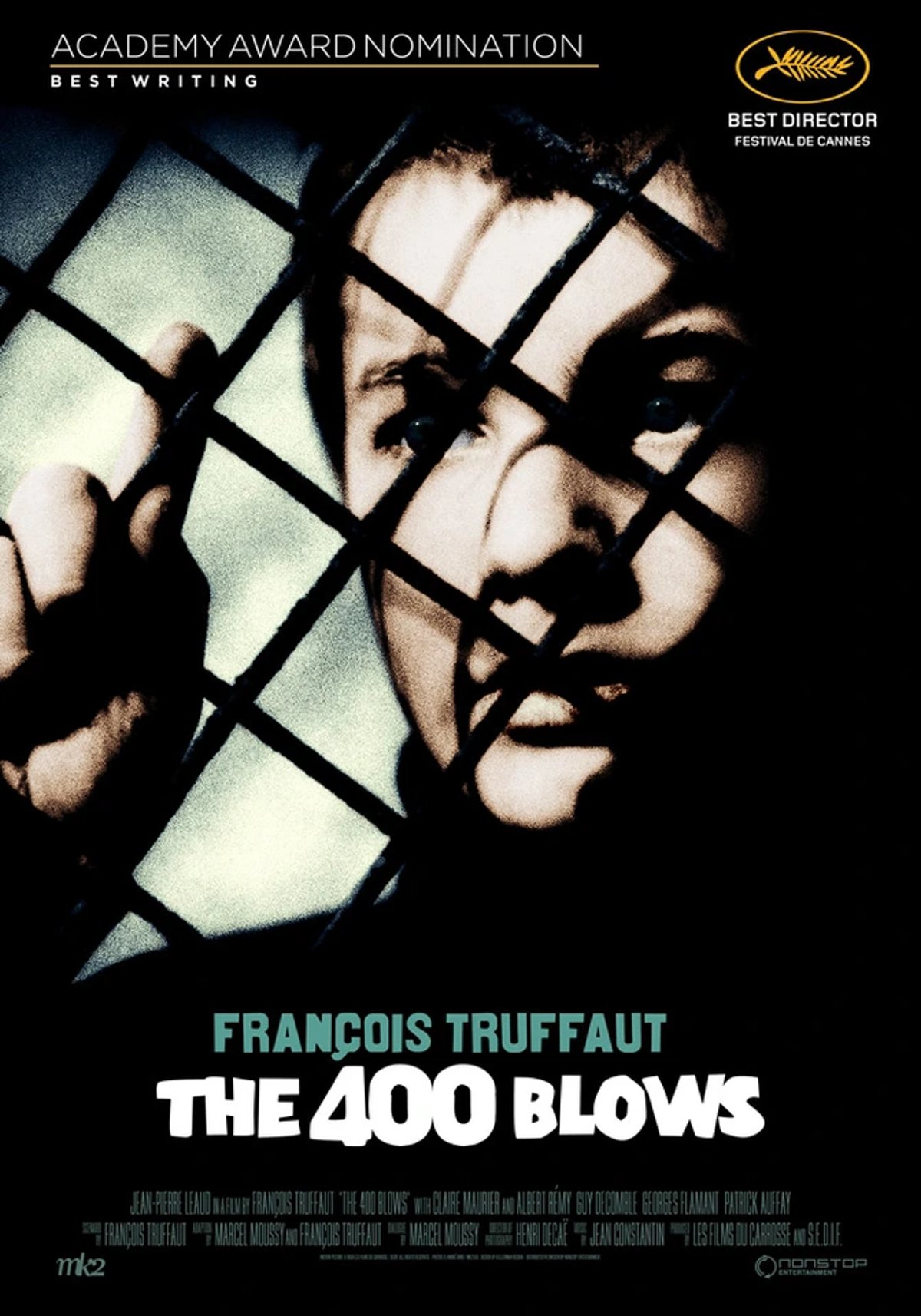
The frame of The 400 Blows works against itself. In 1959, the anamorphic widescreen format was a technology of spectacle, engineered for historical epics and grand musicals. It promised audiences a visual event that the small television screen could not replicate. Yet François Truffaut and cinematographer Henri Decaë turn this logic inward, using the expansive 2.35:1 DyaliScope frame not for grandeur but for a specific, often suffocating, form of psychological portraiture. The width of the image doesn't just capture the sweep of Parisian avenues; it creates vast, empty spaces around the film's small protagonist, Antoine Doinel. He is frequently pinned to one edge of the composition, dwarfed by the architecture of a city that is indifferent to his existence.
This tension between the epic format and the intimate subject matter is the film's foundational formal statement. Where a conventional studio drama of the era would use a tighter, more traditional aspect ratio (like 1.37:1) and controlled studio environments to focus emotion, Truffaut and Decaë use the wide frame to visualize isolation. The extra horizontal information isn't filler; it’s the visual weight of the world pressing in. In the cramped Doinel apartment, the anamorphic lens distorts the close quarters, making them feel even more claustrophobic and warped. On the streets, it emphasizes Antoine’s solitude. This decision to apply the tools of the blockbuster to a small, semi-autobiographical story was a radical act. It announced that a child’s private anguish was worthy of the same cinematic real estate as a chariot race, reframing the very purpose of the widescreen image.
At a Glance
| Film | The 400 Blows (Les quatre cents coups), 1959 |
| Director | François Truffaut (feature debut) |
| Screenplay | François Truffaut and Marcel Moussy, dialogue by Moussy |
| Cinematographer | Henri Decaë |
| Camera operator | Jean Rabier |
| Editor | Marie-Josèphe Yoyotte |
| Art director | Bernard Evein |
| Composer | Jean Constantin |
| Producer | Georges Charlot, for Les Films du Carrosse and SEDIF |
| Format | 35mm black-and-white, DyaliScope anamorphic, 2.35:1, mono |
| Running time | 99 minutes (Criterion and BFI editions) |
| Locations | Paris, Honfleur, and the beach at Villers-sur-Mer in Normandy |
| Awards | Best Director and the OCIC Award at Cannes 1959, with a Palme d'Or nomination; New York Film Critics Circle Best Foreign Language Film, 1959; Academy Award nomination for Best Original Screenplay, 1960 |
| Canon standing | Ranked in the 2022 Sight & Sound critics' poll |
| Where to watch | The Criterion Channel or MUBI for streaming, the Criterion Blu-ray for the restoration and extras |
Why This Film Still Gets Studied
What The 400 Blows solved was the problem of filming subjective consciousness on a budget. It provided a new grammar for translating a character’s inner state into external cinematic language without relying on the artifice of voice-over, dream sequences, or expressionistic studio sets. The film’s enduring power for working filmmakers lies in its demonstration that psychological realism can be achieved through the practical, on-the-ground choices of production: location, camera placement, and duration. It helped define the French New Wave by proving that a personal, author-driven film could be both commercially viable and formally ambitious, influencing generations of directors drawn to naturalistic, location-based storytelling.
For a working filmmaker, the transferable lessons are concrete. First is the principle of location as an active participant in the narrative. The Paris of the film is not a postcard backdrop; it’s a textured, often abrasive environment that shapes the action. The decision to shoot in real apartments, schoolyards, and streets forces a certain kind of blocking and performance. The grit, ambient noise, and unpredictable public become part of the film's fabric. A director or production designer can take from this the mandate to scout locations not just for their look, but for the behavioral possibilities they open up. How does the cramped hallway of a real apartment force characters to interact differently than they would on a spacious set? How does the scale of a real city square inform the blocking of a scene about loneliness?
Second is the embrace of contingency. The film’s mobile, often handheld or lightly stabilized camerawork feels responsive rather than prescriptive. The camera pans to catch a detail, reframes to follow an unexpected movement, and holds on a face for just a beat longer than comfortable. This creates a sense of life being captured as it happens, rather than staged for the lens. For an editor, the lesson is in valuing performance and emotional truth over technical perfection. The cutting, handled by Marie-Josèphe Yoyotte, an editor who would go on to cut for Alain Resnais and Costa-Gavras, often prioritizes the rhythm of a gesture or the intensity of a look over a clean match on action, suggesting an editorial philosophy rooted in behavior.
Finally, the film offers a masterclass in using the long take as a psychological instrument. The closing sequence, a sustained track alongside Antoine’s run to the sea before the camera pushes in on his face, is the clearest example. The duration is not for spectacle; it forces the audience to experience the physical and emotional exhaustion of the character in real time. We feel the strain in our own bodies. When he finally stops and turns to the camera, the direct address is earned through the shared ordeal of the run. This technique, using shot duration to build an internal state, remains one of the most powerful and direct tools in a filmmaker’s arsenal for creating audience empathy.
How It Got Made
The production history of The 400 Blows is a case study in how constraints can forge an aesthetic. As François Truffaut’s first feature film, it was born from a deeply personal place. The screenplay, which he co-wrote with Marcel Moussy, drew heavily from his own troubled youth, lending the project an urgency that transcended its modest origins. Truffaut himself stated his goal was to "express this feeling that adolescence is a bad moment to get through," a mission that guided the film’s unsparing perspective. The production was mounted by Truffaut's own company, Les Films du Carrosse, with backing from SEDIF and Georges Charlot credited as producer. The finished film is dedicated to André Bazin, the critic who took Truffaut in as a teenager and who died in November 1958, days after the shoot began.
This financial reality was the single most significant factor in shaping the film's look and feel. Budget figures circulate in the range of roughly $50,000 to $75,000, drawn from later English-language reference works and distributor materials rather than from surviving production accounts. Treat them as an order of magnitude rather than an audited number. Even at the top of that range, the film was operating far outside the studio mainstream of the late 1950s. A major studio film of the period would have cost many times more. This limitation made the polished, controlled environment of the soundstage an impossibility. The production couldn't afford to build an elaborate Parisian apartment or a convincing reform school.
Consequently, the decision to shoot almost entirely on location was a choice born of necessity. Truffaut, cinematographer Henri Decaë, and art director Bernard Evein used the real streets of Paris and the coastal towns of Honfleur and Villers-sur-Mer as their set. The school sequences were filmed in an actual school during its Christmas vacation. This constraint became the film's greatest aesthetic strength. Decaë’s camera captured the authentic textures of peeling paint, rain-slicked cobblestone, and the indifferent faces of real passersby. The lean budget also dictated a nimble crew and a brisk schedule, reportedly lasting less than two months. This pace discouraged complex, time-consuming lighting setups, pushing Decaë toward a more naturalistic style that relied on available light whenever possible, supplemented with minimal units. The result was a look that felt immediate and documentary-like, a stark departure from the high-key, glossy lighting prevalent at the time.
Within these constraints, the choice of the 35mm DyaliScope format stands out as a bold, counter-intuitive artistic decision. Anamorphic lenses were more expensive and technically demanding than standard spherical lenses. For a low-budget, character-driven drama, it was an extravagant choice. Yet this decision was central to Truffaut's vision. It allowed him to give Antoine's small, interior struggle an epic visual canvas, elevating his personal story into a universal human drama. The combination of a shoestring budget, a run-and-gun location strategy, and a widescreen format intended for spectacle created a visual signature that was entirely new: the intimate epic.
Direction and Blocking
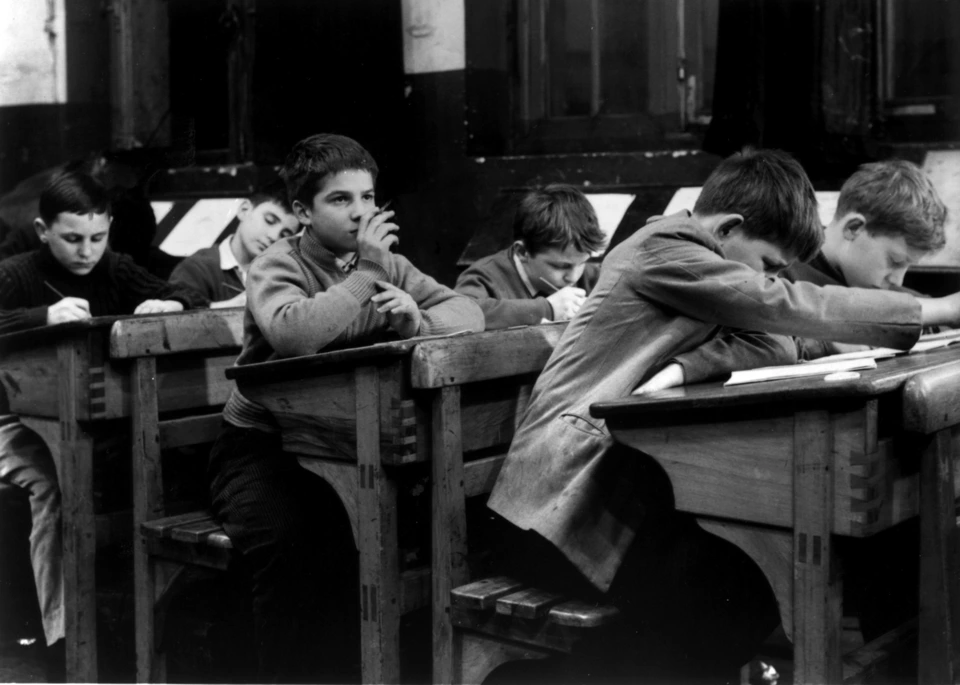
François Truffaut's directorial debut, The 400 Blows (1959), establishes a distinct approach to character movement and spatial relationships, particularly evident in its use of location shooting. The film largely eschews studio artifice, opting instead for the authentic textures of Parisian streets, real apartment buildings, and a school during Christmas vacation. This commitment to on-location shooting, including the reform school sequences in Honfleur and the final beach scene in Villers-sur-Mer, inherently shaped the blocking. Characters often navigate existing urban environments, their movements dictated by the city's architecture and flow. The camera, operated by Jean Rabier, frequently observes Antoine Doinel (Jean-Pierre Léaud) within these spaces, allowing the natural contours of the environment to inform his trajectory.
One notable aspect of Truffaut's direction is the dynamic between Antoine and the often-constricting adult world. Blocking frequently places Antoine in isolation, even within crowded scenes, or frames him against imposing structures. Consider the classroom scenes: Antoine is often positioned at the periphery, his gaze wandering, physically detached from the didactic center of the room. This visual marginalization is not merely symbolic; it informs the rhythm of his performance, suggesting a character constantly seeking an exit or an escape. The director's choice to shoot in real locations meant adapting the blocking to the available space, which in turn lends a documentary-like immediacy to the performances. This approach often results in a less overtly choreographed feel, favoring a more naturalistic, sometimes chaotic, interaction with the environment. The film's energy derives in part from this organic staging, where the characters' movements feel less imposed and more reactive to their surroundings.
Cinematography and Lighting
Henri Decaë's cinematography for The 400 Blows is integral to its visual identity, employing black-and-white 35mm film in an anamorphic format, specifically DyaliScope, with an aspect ratio of 2.35:1. This widescreen presentation, unusual for many intimate dramas of the era, allows for expansive compositions that emphasize Antoine's place within his often-overwhelming environment. Decaë's approach to lighting, while not explicitly documented in terms of ratios, clearly leans towards a naturalistic aesthetic, utilizing available light where possible during the extensive location shoots in Paris and Honfleur. The absence of studio gloss means that light sources are often motivated by the scene's setting, whether it's the diffused daylight filtering through apartment windows or the starker illumination of institutional interiors.
The choice of black-and-white film stock contributes significantly to the film's mood, lending a timeless quality and emphasizing texture and form over color. This monochromatic palette enhances the sense of realism while simultaneously abstracting the urban terrain. Decaë's compositions frequently employ deep focus, allowing multiple planes of action to remain sharp, which reinforces the feeling of an observed reality. The camera work often favors tracking shots, particularly when following Antoine through the streets of Paris. These extended takes hold the viewer in his perspective, creating a subjective experience of his wanderings and escapes. The closing movement, a long lateral track running alongside Antoine that resolves into a zoom onto his face at the water's edge, shows Decaë combining scale with an unbroken hold on one small figure. The zoom ends on a freeze frame, fixing the ambiguity of Antoine's future in a single held image.
Production Design and Art Direction
Bernard Evein's production design for The 400 Blows is characterized by its commitment to authenticity, largely foregoing constructed sets in favor of real-world locations. This decision aligns with the film's overall naturalistic aesthetic and its association with the French New Wave. Evein worked within the constraints and the opportunities of shooting in actual Parisian apartments, schools, and streets. The visual texture of the film, therefore, comes directly from these lived-in spaces. The cluttered, somewhat cramped interiors of Antoine's family apartment, for instance, convey a sense of domestic tension and economic struggle without needing elaborate set dressing. The production design here is subtractive rather than additive, focusing on what is already present in the chosen locations.
The reform school in Honfleur, another key location, is presented with a stark, institutional realism. Its bare walls, functional furniture, and lack of personal touches contribute to the oppressive atmosphere. This design choice shows the film's themes of confinement and the dehumanizing aspects of the juvenile justice system. Practical elements within these locations, such as school desks, street signs, and shopfronts, serve as both narrative props and visual anchors, grounding the story in a specific time and place. The production design, in essence, becomes an extension of the location scouting, where the chosen environments themselves provide the bulk of the visual information. This approach not only saved resources but also imbued the film with a raw, unvarnished quality that would have been difficult to replicate on a soundstage.
Editing and Rhythm
Marie-Josèphe Yoyotte's editing of The 400 Blows contributes significantly to the film's dynamic rhythm and emotional impact. The cutting often employs a fluid, almost improvisational style that mirrors Antoine's restless energy. While the film features extended tracking shots, particularly during Antoine's escapes and wanderings, Yoyotte's work ensures that these moments are balanced with more concise sequences, preventing any sense of narrative stagnation. The editing rhythm shifts to reflect Antoine's emotional state or the urgency of a particular scene. For instance, the montage of Antoine running through the streets of Paris, often accompanied by Jean Constantin's score, uses quick cuts and varied angles to convey a sense of freedom and exhilaration.
Conversely, scenes depicting Antoine's confinement, such as those in the reform school, might feature longer takes or more deliberate cuts, emphasizing the passage of time and the monotony of his existence. Yoyotte's editing also plays a key role in establishing character perspective. The famous final sequence, culminating in the freeze frame, is a prime example of how editing can distill a complex emotional moment. The sustained zoom, followed by the abrupt halt, creates an indelible image that forces the viewer to confront Antoine's uncertain future. The film's overall structure, moving from Antoine's troubled home life to his experiences in the reform system, is expertly paced, allowing the narrative to unfold organically while maintaining a compelling momentum. The editing often prioritizes emotional continuity and narrative clarity over strict adherence to conventional continuity editing rules, a hallmark of the New Wave aesthetic.
Sound Design and Score
The sound design for The 400 Blows, with Jean-Claude Marchetti credited for sound and Jean Labussière as assistant sound, operates within the constraints of a mono sound format, yet effectively builds the film's aural world. The soundscape is characterized by its naturalistic approach, prioritizing ambient sounds from the on-location shooting. The bustling sounds of Parisian streets, traffic, distant conversations, the clamor of a schoolyard, are integrated to create a strong sense of place. These diegetic sounds often serve to contextualize Antoine's experiences, highlighting the contrast between his internal world and the external environment. The film effectively uses silence or sparse sound to emphasize moments of isolation or introspection, such as Antoine's solitary moments in his room or during his escape.
Jean Constantin's score, a distinctive element of the film, provides a melancholic yet often whimsical counterpoint to the visuals. The main theme, with its distinctive instrumentation, becomes synonymous with Antoine's character and his journey. The music is used sparingly but effectively, often underscoring moments of emotional significance or providing a rhythmic drive to sequences of movement. For example, the score frequently accompanies Antoine's running sequences, elevating them beyond mere physical action to an expression of youthful rebellion and longing for freedom. The interplay between the naturalistic sound design and the expressive score creates a rich auditory experience that complements the film's visual style. The sound mixing ensures that dialogue, even when recorded on location, remains clear, while allowing environmental sounds to breathe and contribute to the overall atmosphere.
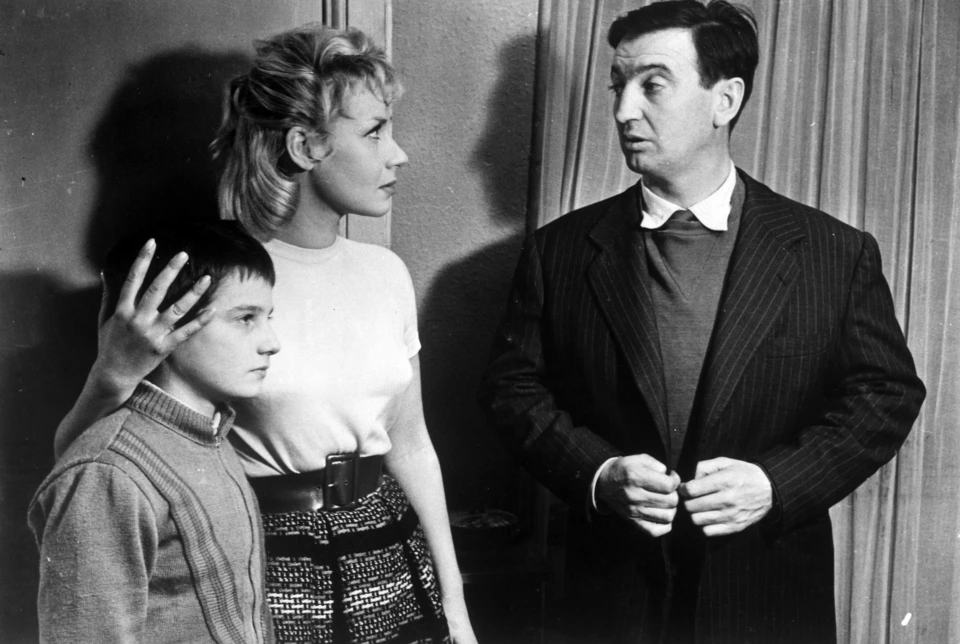
!Image Jean-Pierre Léaud, Claire Maurier, and Albert Rémy in The 400 Blows (1959)
Performance and Casting
The casting of Jean-Pierre Léaud as Antoine Doinel is perhaps the most critical decision in The 400 Blows, defining the film's emotional core and its lasting legacy. Léaud's performance, under François Truffaut's direction, is marked by a raw, unvarnished authenticity that transcends conventional acting. His portrayal captures the restlessness, vulnerability, and defiance of adolescence with remarkable naturalism. Léaud's expressive face, particularly his eyes, conveys a complex inner life, a blend of mischievousness, sadness, and a yearning for understanding. Léaud is often called a non-professional, which is not quite accurate. He had appeared as a child in Georges Lampin's La Tour, prends garde! (1958), and his mother, Jacqueline Pierreux, was an actress. What was unusual was the route in: Truffaut advertised in a newspaper and held an open audition, bypassing the professional casting apparatus of the period. The surviving audition footage, included on the Criterion release, shows Truffaut interviewing a self-possessed thirteen-year-old rather than testing him on written sides. The casting method, not the absence of experience, is what gives the performance its documentary charge. Léaud's performance doesn't feel "acted" in the traditional sense; rather, he embodies Antoine with an almost autobiographical sincerity.
The supporting cast, including Claire Maurier as Antoine's mother and Albert Rémy as his stepfather, deliver performances that anchor Antoine's world. Maurier's portrayal of a frustrated, often harsh mother figure is nuanced, suggesting her own struggles without fully excusing her treatment of Antoine. Rémy's stepfather is depicted with a blend of gruffness and occasional, fleeting moments of affection, creating a complex parental dynamic. The interactions between Léaud and the adult actors feel unforced, contributing to the film's verisimilitude. The casting of children in the classroom scenes also adds to the film's realism, capturing the chaotic energy and distinct personalities of a group of schoolboys. Truffaut's direction of his actors, particularly Léaud, seems to have encouraged improvisation and a naturalistic delivery, resulting in performances that feel lived-in and deeply resonant.
Scene Study: The Psychological Interview
François Truffaut’s The 400 Blows (1959) frequently breaks from classical narrative grammar to access the inner state of its protagonist, Antoine Doinel (Jean-Pierre Léaud). Nowhere is this more apparent than in the sequence where Antoine, now in a youth observation center, is interviewed by an unseen psychologist. The scene abandons conventional coverage and continuity editing, opting for a static, direct-address confrontation that feels closer to documentary than to scripted drama. The result is a raw, unmediated confession that serves as the film’s psychological anchor.
The sequence is constructed from a series of shots holding on Antoine, seated and looking slightly off-camera, as he answers the questions of a disembodied female voice. Cinematographer Henri Decaë frames Antoine in a medium close-up, isolating him against a nondescript wall. The DyaliScope 2.35:1 anamorphic frame, which elsewhere provides a wide canvas for Antoine’s wanderings through Paris, here feels constrictive. It offers no escape, pinning him in the center of the screen. The lighting is simple and functional, a soft key that models his face without overt stylization, suggesting the institutional plainness of the setting. There is no visible effort to create a dramatic chiaroscuro; the light is there to reveal, not to obscure.
What defines the sequence is the editing by Marie-Josèphe Yoyotte. As Antoine recounts his history of petty theft, his difficult relationship with his mother, and his feelings of abandonment, the film employs a series of jump cuts. A single, continuous monologue is broken into fragments. Antoine’s head position shifts jarringly from one shot to the next, breaking the spatial and temporal continuity that audiences expect. This is not an error but a deliberate choice. The cutting pattern externalizes Antoine’s own fragmented memory and troubled psyche. He is not delivering a polished speech but rather pulling forth painful, disconnected truths. The jump cuts prevent the audience from settling into the comfort of a smooth performance, forcing them to experience the discomfort and effort of Antoine’s recollection. On this reading, the cuts aren't just stylistic tics of the burgeoning French New Wave; they are the formal equivalent of a stammer, representing a mind struggling to assemble a coherent narrative of its own pain.
The sound design, credited to Jean-Claude Marchetti, is fundamental to the scene's power. The psychologist is never seen, her presence established only by her calm, professional questions on the mono soundtrack. This choice accomplishes several things. It focuses the viewer’s entire attention on Antoine’s face and his reactions. It also transforms the viewer into a stand-in for the psychologist, creating an uncomfortable intimacy. We are placed in the position of the interrogator, the confessor. The dynamic is one of pure inquiry and response, stripped of the visual cues of a typical dialogue scene (shot/reverse-shot, over-the-shoulder coverage, reaction shots). The only reactions that matter are Antoine’s, and the only visual information is his face. Jean Constantin’s musical score is absent, leaving the sequence bare, filled only with the stark sound of a voice telling its story.
What the sequence teaches. Breaking continuity through devices like the jump cut can be a powerful tool for expressing a character’s psychological state, sacrificing surface realism for emotional truth. Off-screen sound, particularly dialogue, can create a potent power dynamic and focus audience attention more intensely than conventional coverage. A static camera is not a passive camera; when held on a human face, it becomes an instrument of interrogation and revelation.
Scene Study: The Run to the Sea
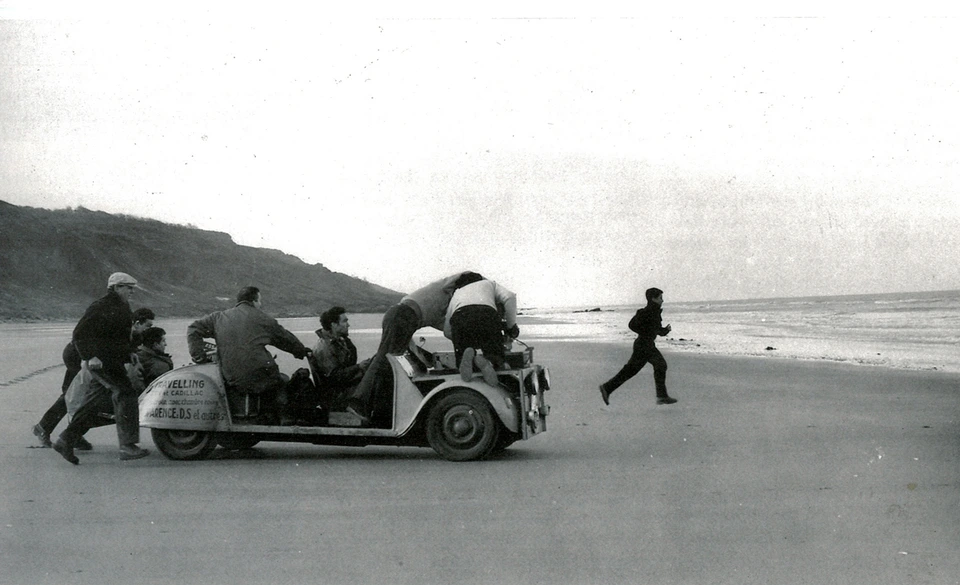
If the interview sequence represents Antoine’s psychological confinement, the film’s final sequence is a desperate, kinetic sprint toward physical and symbolic freedom. After escaping the observation center during a football game, Antoine runs. He runs through fields, down country roads, and finally across a vast, empty beach until he reaches the edge of the sea. The sequence is a masterclass in using camera movement, terrain, and music to build a purely cinematic conclusion, one that transcends dialogue and relies entirely on the grammar of motion and image.
This final run is constructed from a small number of extended takes. Decaë’s camera tracks Antoine, sometimes in profile, sometimes from behind, as he flees. The use of the anamorphic format is completely different here than in the interview. The wide 2.35:1 frame now emphasizes the scale of the world Antoine is running through. He is a small figure dwarfed by the rural terrain, his goal, the sea, an unseen, almost mythical destination. The long, unbroken shots, likely achieved with a camera mounted on a vehicle or a dolly, force the viewer to experience the duration and physical toll of the run. We feel his exhaustion because the camera refuses to cut away. There are no ellipses to shorten the journey. The camera’s sustained movement creates a bond between the viewer and the character, a shared sense of breathless desperation.
The location shooting, a hallmark of the production, is central. The sequence charts a clear geographical and emotional progression from the enclosed fields near the center to the boundless expanse of the beach at Villers-sur-Mer. The lighting is natural, likely the flat, diffuse light of an overcast day, which lends the scene a stark, unromanticized quality. This is not a picturesque escape; it is a grim, determined flight. As Antoine finally emerges onto the sand, the terrain opens up dramatically. The camera pulls back, showing him as a tiny speck running toward the water, the horizon a seemingly infinite line. The visual language powerfully communicates both the scale of his ambition (to reach the ocean he’s never seen) and his deep solitude.
Jean Constantin’s score is the sequence's emotional engine. The music is not merely wallpaper; it is an active participant, its driving, somewhat melancholic strings providing the propulsive energy for Antoine’s run while also coloring it with a sense of tragedy. The sound bed is otherwise sparse, likely containing only the ambient sounds of his footsteps and the eventual crash of the waves. The music does the work that dialogue or internal monologue might do in a more conventional film, articulating Antoine’s hope, his weariness, and the ambiguous nature of his achievement.
!Image Jean-Pierre Léaud in The 400 Blows (1959)
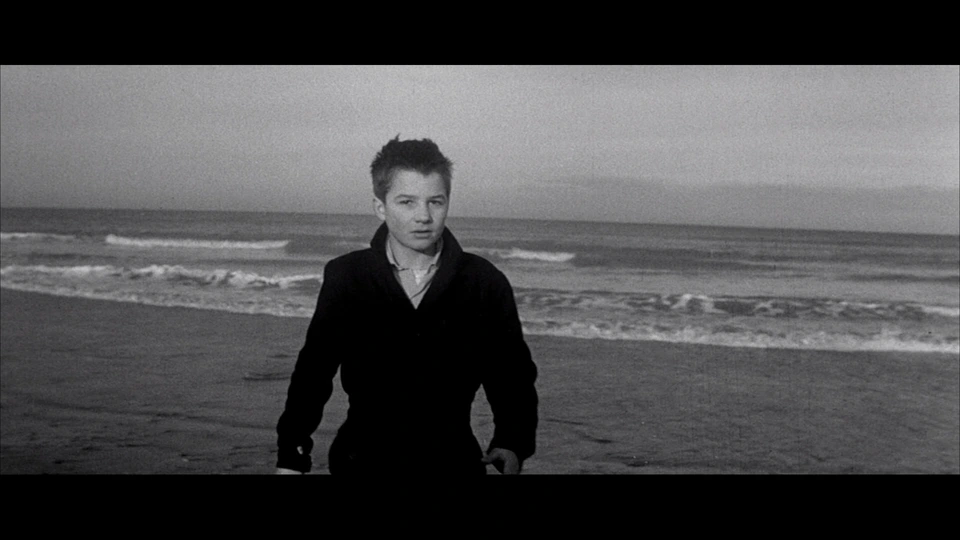
The sequence culminates in one of cinema’s most famous endings. Antoine reaches the water’s edge, turns, and looks directly into the camera lens. As he does, the camera executes a rapid zoom-in on his face, and the image freezes. This final gesture shatters the fourth wall. For the entire film, we have been observers of Antoine’s life. In this last moment, he confronts us, his expression unreadable, a mix of defiance, confusion, and accusation. The freeze-frame, an editorial decision, turns a moment in time into an eternity. It denies us the comfort of a resolution, leaving Antoine trapped between the institution behind him and the impassable sea before him, his gaze locked with ours. It’s an open question whether this final shot is one of triumph or despair, a question the film refuses to answer.
What the sequence teaches. Long, continuous tracking shots can viscerally convey physical effort and the passage of time, immersing the audience in a character’s struggle. The aspect ratio is a key narrative tool; a wide frame can be used to create claustrophobia in a close-up or to emphasize isolation in a wide shot. A non-dialogue, music-driven sequence can carry immense emotional weight, and a film’s score can function as a primary storytelling voice. Breaking the fourth wall, if deployed with precision at a key structural moment, can transform the audience from passive observers into active participants in the film’s central question.
Technical Firsts and What Was Actually New
The 400 Blows (1959) arrived as a defining work of the French New Wave, often cited for its perceived technical innovations, yet many of its signature techniques were more a matter of emphasis and context than absolute novelty. The film's extensive use of location shooting, for instance, was not unprecedented; Italian Neorealism had embraced real-world settings over studio sets a decade earlier, in films like Roberto Rossellini's Rome, Open City (1945) and Vittorio De Sica's Bicycle Thieves (1948). Truffaut, however, applied this principle with a specific Parisian sensibility, integrating the city's streets and landmarks into the narrative fabric rather than merely using them as backdrops. This commitment to authentic urban environments, including real apartment buildings and a school during Christmas vacation, fostered a sense of immediacy and documentary-like realism that felt fresh in the context of French cinema at the time. The film’s 35mm black-and-white anamorphic presentation (DyaliScope, 2.35:1) further accentuated this realism, providing a wide, expansive canvas for the streetscapes and interior spaces.
The film's fluid, handheld camera work and naturalistic lighting, often attributed to its cinematographer Henri Decaë, were also evolutions of existing practices. Decaë had already established a reputation for agile cinematography on films like Louis Malle's Ascenseur pour l'échafaud (1958), where available light and a mobile camera contributed to a gritty, spontaneous aesthetic. In The 400 Blows, this approach was refined and applied to a narrative centered on a child, allowing for a more intimate and less constrained visual perspective. The long takes, particularly those following Antoine Doinel through the streets, were not entirely new, having precedents in films from Orson Welles's Touch of Evil (1958) to Max Ophüls's Lola Montès (1955), but their integration here served to immerse the viewer directly into Antoine's subjective experience, emphasizing his isolation and restlessness. This was an innovation of degree, pushing the established boundaries of cinematic naturalism within a narrative feature.
The film's editing, handled by Marie-Josèphe Yoyotte, often features jump cuts and a less overtly classical continuity than was typical of mainstream French cinema. While jump cuts are frequently associated with Jean-Luc Godard's Breathless (1960), The 400 Blows employs them more subtly, often to convey the passage of time or a character's internal state rather than as a purely stylistic flourish. This technique, though present in earlier experimental cinema, gained new narrative significance in the New Wave context, contributing to a sense of abruptness and psychological truth. The film's use of direct sound, favoring ambient noise and natural dialogue over heavily post-synched audio, also built upon earlier trends in documentary filmmaking, but its application to a fictional narrative lent it a raw, unpolished quality that contrasted sharply with the more polished studio productions of the era. The perceived technical "firsts" of The 400 Blows are thus better understood as a synthesis and amplification of existing techniques, applied with a distinct authorial vision that collectively redefined cinematic grammar for a generation.
Influence and Inheritance
The 400 Blows stands as a foundational text for the French New Wave, its DNA evident in countless films exploring youth, alienation, and the urban terrain. Its influence extends beyond specific technical innovations, shaping an entire approach to filmmaking that prioritized spontaneity and authorial expression. Jean-Luc Godard's Breathless (1960), released shortly after, shares a similar spirit of improvisational energy and location shooting, with its protagonist Michel Poiccard (Jean-Paul Belmondo) embodying a rebellious, anti-establishment ethos reminiscent of Antoine Doinel. The film's use of jump cuts, while more pronounced in Breathless, can be seen as an extension of the less conventional editing rhythms introduced in The 400 Blows.
The film's semi-autobiographical depiction of childhood and adolescence, particularly the character of Antoine Doinel (played by Jean-Pierre Léaud), established a template for coming-of-age narratives. Léaud himself would reprise the role in a series of subsequent Truffaut films, including Antoine and Colette (1962), Stolen Kisses (1968), Bed and Board (1970), and Love on the Run (1979), creating one of cinema's most sustained character studies. This serial exploration of a single character's life, evolving with the actor, was a novel approach that influenced later filmmakers to revisit characters across multiple works. Richard Linklater's Boyhood (2014), which filmed its protagonist Mason Evans Jr. (Ellar Coltrane) over twelve years, offers a contemporary echo of this longitudinal character development, albeit with a different production methodology.
Beyond character, the film's visual language of long takes following a character through urban environments became a recurring motif. Martin Scorsese's Mean Streets (1973), for instance, features numerous sequences of its characters navigating the chaotic streets of Little Italy, often with a mobile camera that mirrors the restless energy of The 400 Blows. The film's commitment to capturing the lived experience of its setting, using Paris as an active participant rather than a mere backdrop, prefigures the work of many urban filmmakers. Spike Lee's early films, such as She's Gotta Have It (1986) and Do the Right Thing (1989), similarly imbue their New York City and Brooklyn settings with distinct personality and narrative weight, using real locations to ground their stories in specific cultural and social contexts. The emotional resonance derived from Antoine's final, ambiguous freeze-frame gaze at the ocean has also been widely referenced; its open-endedness, leaving the character's future uncertain, became a hallmark of New Wave storytelling that rejected conventional narrative closure.
Critical Reception and Counter-Readings
Upon its release in 1959, The 400 Blows was met with immediate critical acclaim. Truffaut had been banned from Cannes as a critic in 1958 after attacking the festival in print. He returned the following year with the film in competition and left with the Best Director prize and the OCIC Award, with a Palme d'Or nomination on the record. The New York Film Critics Circle named it Best Foreign Language Film, and it was nominated for the Academy Award for Best Original Screenplay in 1960. Critics at the time, particularly those associated with Cahiers du Cinéma, recognized it as a founding work that embodied their theoretical principles of auteurism and cinematic realism. The film was lauded for its fresh perspective on childhood, its naturalistic performances, and its rejection of the staid conventions of "tradition of quality" French cinema. The New York award mattered structurally. It marked the point at which the New Wave stopped being an internal French argument and became an international style. Roger Ebert later folded the film into his Great Movies series, reading it as a portrait of a child whose misery is never softened for adult comfort. That reading, sympathy without sentimentality, remains the dominant one.
The current consensus largely aligns with this initial reception, with the film widely regarded as a canonical work that defined the French New Wave and influenced generations of filmmakers. It is frequently cited as a masterpiece of autobiographical cinema and a poignant exploration of childhood alienation. However, counter-readings have emerged that offer alternative perspectives, moving beyond the celebratory narratives of its initial reception.
One significant counter-reading centers on the film's title itself. As noted by some cultural critics, the French idiom "faire les quatre cents coups" translates literally to "to make the four hundred blows," but colloquially means "to raise hell" or "to sow one's wild oats." This idiomatic nuance suggests that while the film appears to be a naturalistic, almost documentary-like portrayal of a troubled youth, it is simultaneously framed within a culturally specific understanding of adolescent rebellion. On this reading, Antoine's actions are not merely a raw, unfiltered expression of his inner turmoil but are also, to some extent, a performance of a recognized social role, the mischievous, hell-raising adolescent. This perspective complicates the notion of pure autobiography, suggesting that Truffaut, even in his most personal work, was engaging with and reinterpreting established cultural narratives about youth. The film, therefore, can be seen not just as a window into Truffaut's past, but also as a commentary on the societal construction of "difficult" children. This is a critical position rather than a documented statement of intent, and it should be read that way. It does hold up against the film's own construction, though. The pranks are staged with comic timing, and the misery is staged plainly, without music or cutting to sell it.
What Working Filmmakers Should Steal
1. Put the small figure at the edge of a wide frame Mechanic: Decaë composes Antoine off-centre in a 2.35:1 anamorphic frame and leaves the remaining two thirds of the image filled with architecture, adults, or empty street. Nothing enters the negative space to balance it. Moment: The walk to the police station and the wagon ride through Paris, where Antoine sits small and low in the frame while the city keeps moving past the window behind him. Application: If you shoot wide, resist the urge to centre and resist the urge to fill. Frame your character at roughly the one-third mark and let the other side stay unresolved. It reads as isolation without a line of dialogue about it. For the mechanics of choosing that frame in the first place, see our anamorphic filmmaking guide.
2. Break the axis once, and only once Mechanic: The psychologist interview is played almost entirely as single-camera address to a lens standing in for an off-screen interviewer, with the questions used as audio cues rather than as reverse coverage. There is no shot-reverse-shot to fall back on. Moment: The interview at the observation centre, where Antoine answers questions about his mother and the film simply holds on him. Application: Pick the one scene where the audience needs to be alone with a character, and strip the coverage out of it. No reverse, no inserts. The absence of the second angle is the point. That is a prep decision, not an edit decision: see directing coverage without overshooting.
3. Move the camera at the actor's pace, not the scene's Mechanic: Sustained lateral tracking shots run alongside Antoine at his own walking or running speed, so the camera never gets ahead of him and never lags. The shot ends when he stops, not when the beat is covered. Moment: The final run to the sea, a long track matched to his stride before it resolves into a push on his face. Application: Rehearse the move with the actor before you rehearse it with the dolly grip, and set speed from the performance. The technique carries a real prep cost: see camera movement execution and rehearsal method.
4. Light interiors from what the room already has Mechanic: Decaë works from windows and practicals in the cramped Doinel apartment, using bounce and small supplementary units rather than building a studio key. Faces sit inside the exposure of the room instead of on top of it. Moment: The apartment scenes at night, where the level falls off a metre from the practical and nobody has been given a rim. Application: Expose for the practical, add bounce for the face, and stop there. In a small apartment the win usually comes from taking light away rather than adding it: see negative fill mastery and working fast in small spaces.
5. Cut out the connective tissue between decisions Mechanic: Yoyotte drops the transitional beats. Antoine decides, and the next shot is the consequence. Journeys, arrivals, and explanatory reaction shots are absent, which compresses the runtime and makes the boy's life feel like it is happening to him faster than he can process it. Moment: The typewriter theft and its aftermath, which moves from intent to failure to custody with the intervening logistics removed. Application: In your assembly, find every shot whose only job is to move a character from one place to another and cut it. If the scene still plays, you have bought pace for free. See the complete guide to film editing workflows.
6. Let the location's own noise carry the scene Mechanic: The film leans on sound recorded in the street, with traffic, footsteps, and voices left high in the mix rather than pushed under score. Constantin's music is used sparingly and then withdrawn. Moment: Antoine's wanderings through Paris, where the city's noise floor does the work a score would normally do. Application: Budget time to record wild ambience at every location while you are still standing in it, then mix it forward. It costs nothing on the day and saves you from scoring your way out of a flat scene later. Scout for it early: see how to scout locations for sound.
The Film in the Canon
The 400 Blows is one node in a longer argument about location shooting, small crews, and the seriousness of ordinary life. Read it against Aguirre, the Wrath of God, where a similarly stripped production method produces the opposite tone, and against Jeanne Dielman and its use of natural light, which pushes the New Wave's window-light realism to its limit. For the movement's long tail, see the New Wave's influence on exile and diaspora cinema. Among directors, Ingmar Bergman offers the closest parallel in the use of the sustained face, and Akira Kurosawa the sharpest contrast in blocking philosophy.
How to Watch It
Watch the Criterion Collection edition, which carries the restoration and the Léaud audition footage, or stream it on The Criterion Channel or MUBI. The film runs 99 minutes. Anything markedly shorter is a cut or a mistimed transfer.
On a first pass, watch it straight through and let the story work. Notice how rarely the film explains anything, and how much of Antoine's state is carried by where he stands in the frame rather than by what he says.
On a second pass, run a long stretch with the sound off and watch composition only. Track where Antoine sits in the 2.35:1 frame from scene to scene, and count how often the space next to him stays empty. Then run a key sequence with the picture off and listen to Constantin's score against the street ambience. You will hear how little music there actually is, and how much of the emotional load is carried by traffic and footsteps.
For comparison, watch Godard's Breathless (1960) for the opposite editorial temperament, Rossellini's Rome, Open City (1945) for the neorealist roots of the location method, and Jean Vigo's Zero for Conduct (1933), the direct ancestor of the school scenes and a film Truffaut cited repeatedly.
Sources and Further Reading
Critical Texts and Scholarship
- Truffaut, François. The Films of My Life. Da Capo Press. Truffaut's own criticism, where the film's arguments were first written down. Find it
Book links above are Amazon affiliate links. BlockReel may earn a small commission on purchases at no extra cost to you.
Primary and Archival Sources
© 2026 BlockReel DAO. Film Studies series. Licensed under CC BY-NC-ND 4.0. No AI training use permitted: this work may not be used to train, fine-tune, or evaluate machine learning models without written permission.